
Are You Wearing the Wrong Underwear with Your Faja?Updated 4 months ago
.png) |
Fajas Tributo
What to Wear Under a Faja for Post-Surgery and Daily Shaping
Wearing a faja correctly isn’t just about choosing the right size. What you wear underneath matters, and the wrong underwear can affect comfort, compression, and even recovery.
If your faja rolls, feels uncomfortable, or leaves marks, the issue may not be the garment, it could be your underwear.
Why Underwear Choice Matters
A faja is designed to provide even compression and support. The wrong underwear can:
Disrupt compression
Cause rolling or pressure marks
Increase friction and irritation
Affect post-surgical healing
Common Underwear Mistakes
Lace thongs: skin irritation
Cotton briefs: too bulky
Low-rise panties: roll-down nightmare
Visible seams: compression marks
What to Wear Under a Faja (By Healing Stage)
 |
Stage 1: Fresh Post-Op
✔ Wear the faja directly on the skin
✘ No underwear
This helps maintain even compression and reduce friction during healing.
If you prefer a light layer, especially when using boards or foams, a thin, breathable tank top can be used instead of underwear.
👉 We recommend our Essential Tank , designed to work perfectly with Stage 1 fajas.
 |
Stage 2: After Initial Healing
(Only if approved by your surgeon)
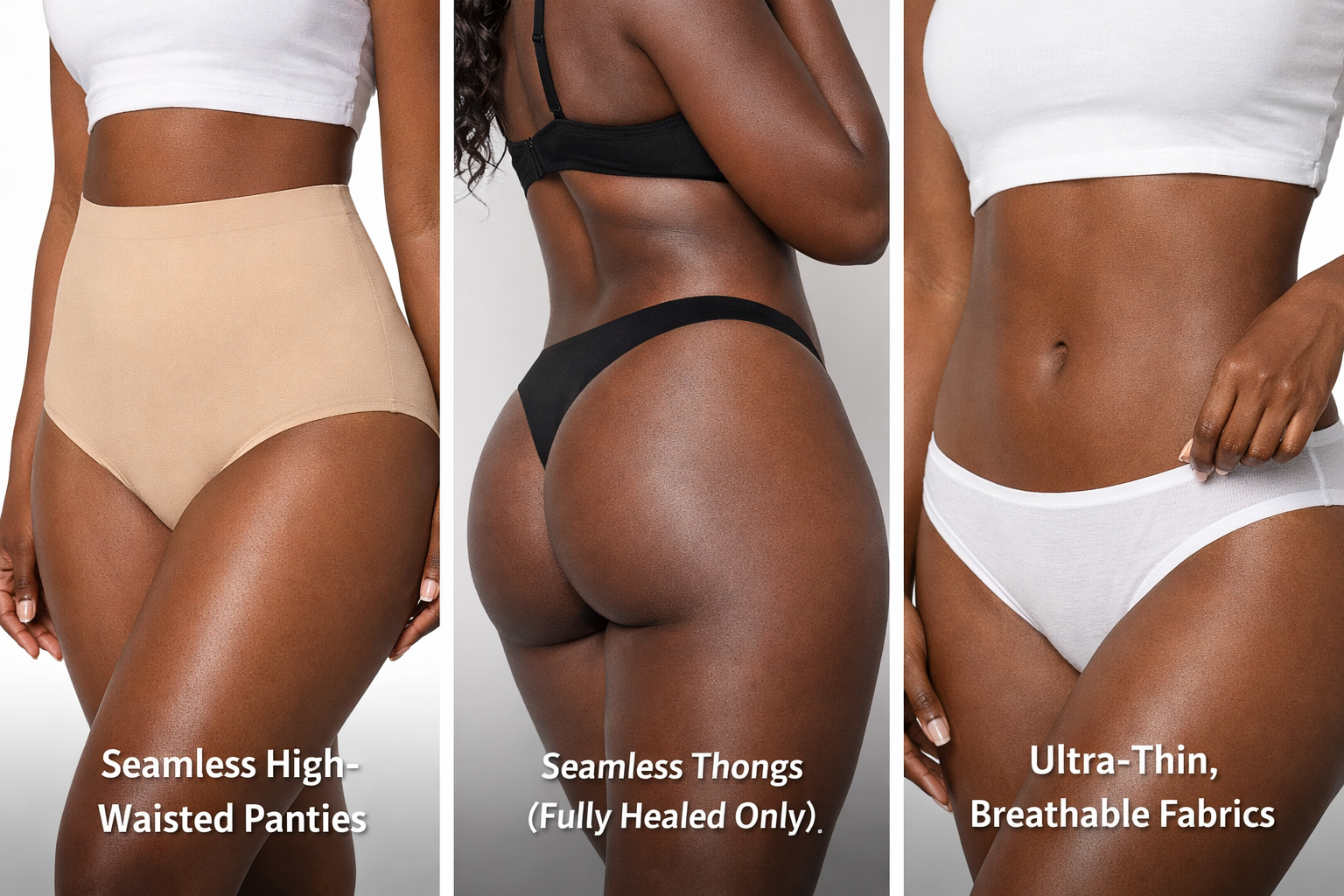 |
✔ Seamless high-waisted panties
✔ Seamless thongs (fully healed only)
✔ Ultra-thin, breathable fabrics
These options improve comfort without disrupting compression.
Post-Surgery vs Daily Wear
Post-surgery: prioritize healing, hygiene, and minimal friction
Daily wear: seamless, lightweight underwear works best
The goal is always the same: support your body without interfering with compression.
💡 Pro Tip
Many fajas include a zipper flap, so you can use the restroom without taking everything off and keep your private area covered.
Wearing underwear over the faja is optional, just an extra comfort choice, not a must. 💕
 This blog is for educational purposes only. Always consult your doctor for medical guidance.